
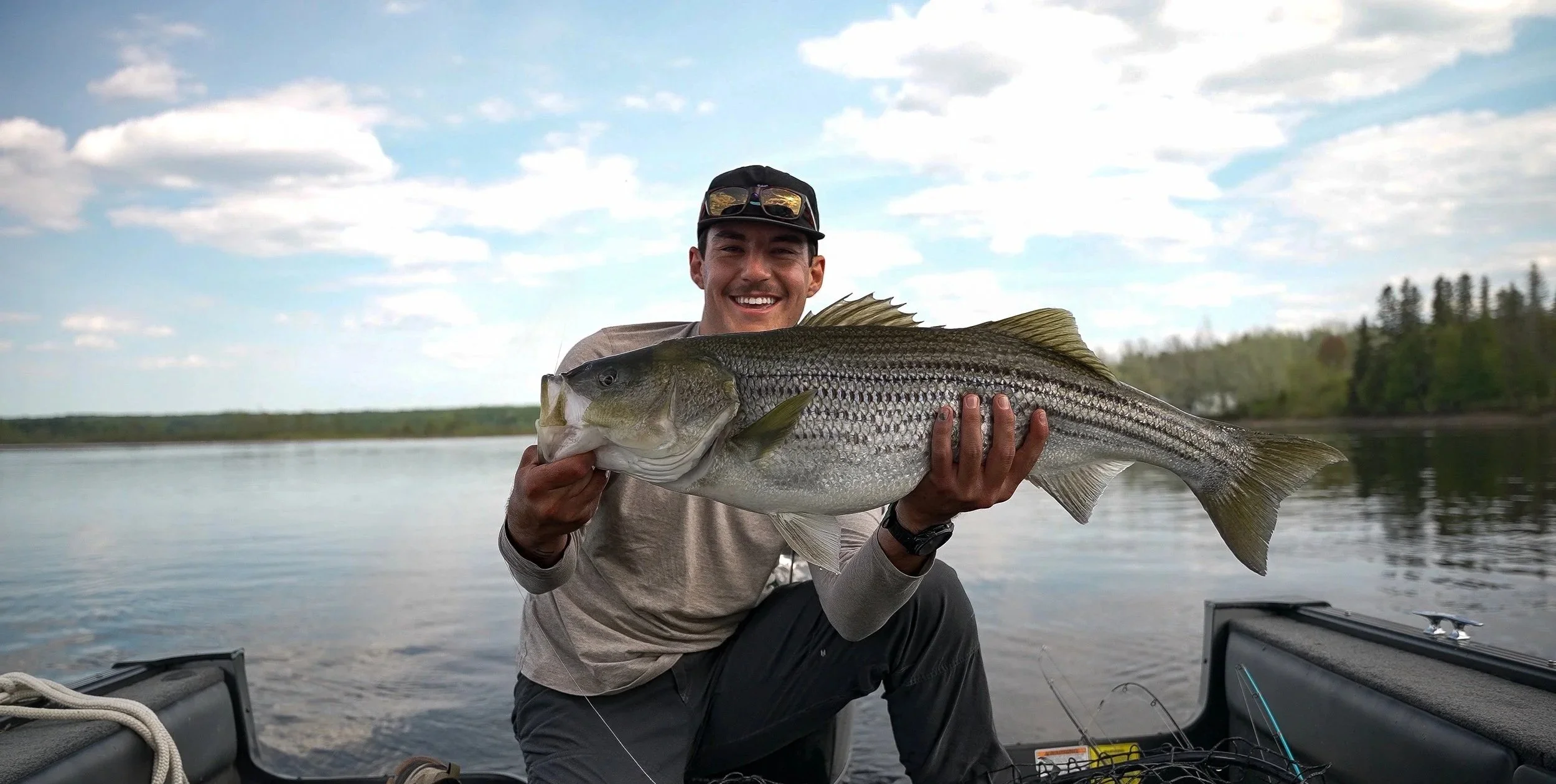
STRIPED BASS
“A WORLD CLASS FISHERY”
It is now common to end a day with several 35+ inch striped bass in the net in addition to overall numbers frequently in the hundreds.
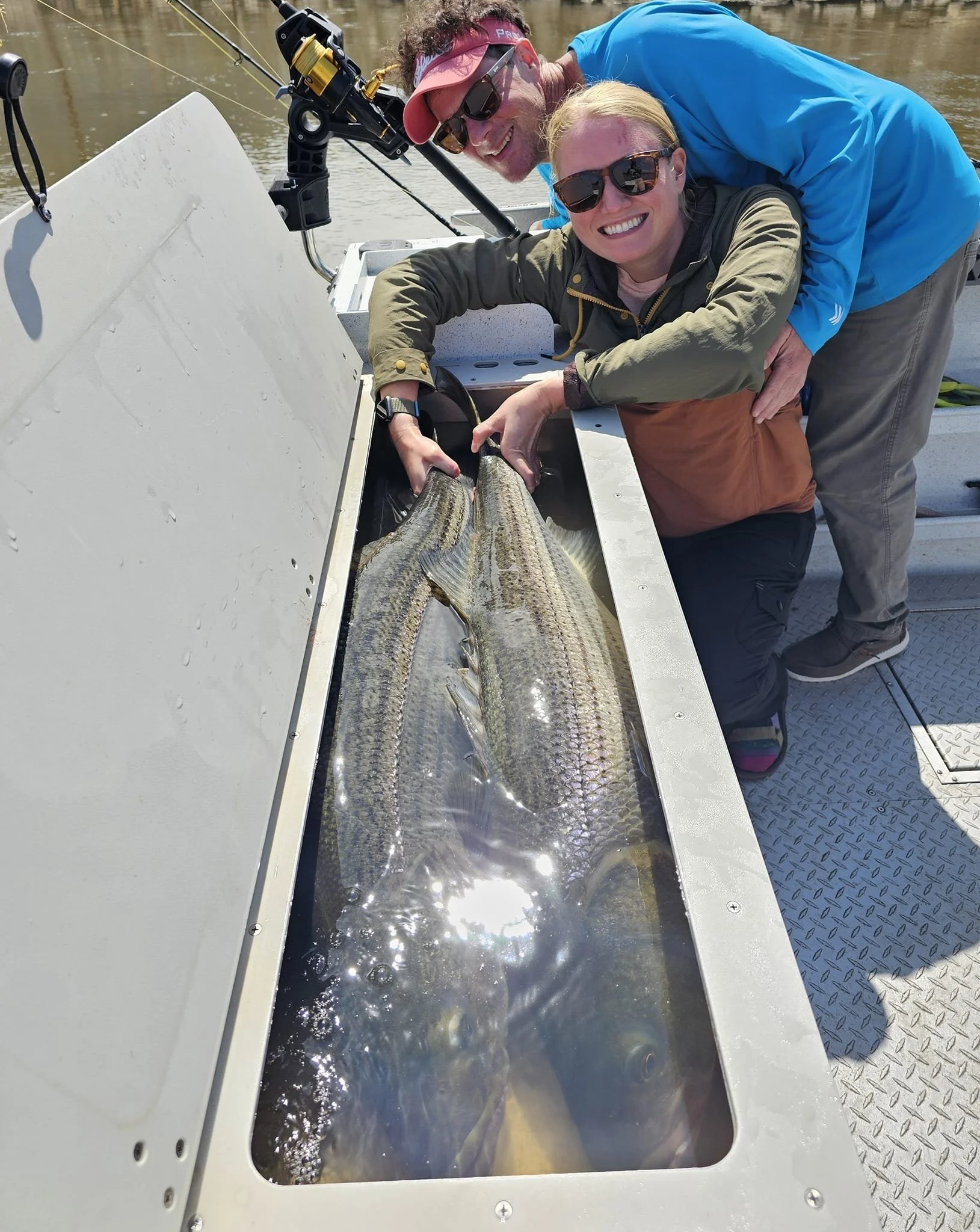
NBFG offers Striper trips on the Miramichi and Saint John rivers to guests of all ages and experience levels. Our guides not only help put you in the right place at the right time but ensure you will learn and benefit from their years of experience on the water. New Brunswick’s Miramichi River is home to an up and coming world class Striper fishery. Once nearly extirpated, these fish have rebounded in a way never seen before in our lifetime. Reports place the population of these tough, aggressive fish somewhere in the realm of 300k to 1 million strong in breeder abundance. The Saint John river offers clients a chance to chase massive stripers that migrate from the coast US and surrounding Bay of Fundy. These fish can get in excess of 4 feet long.
Some general information about the seasons and locations are as follows:
Northumberland Strait
Spring Run – April 15th until Mid June (Miramichi river)
Clients can expect good days of spring striped bass fishing to feature catches in the 100s of fish. Fish in excess of 3 feet in length are common.
Clients should expect to dress warmly as wind on the water cools significantly. Layers are recommended, especially in the early weeks where weather can be volatile with cold mornings and hot afternoons.
Striped bass overwinter in key areas; ~20% of the full run already present upon ice out waiting to begin the journey to spawn (spawn peaks near 60F in upper reaches). As the river fills with fish from surrounding rivers, there will be 300k–1 million striped bass entering the Miramichi river.
Style of fishing varies day to day as the run unfolds. One day could feature targeting deep holding bass in 30FT and within a few days this could shift to topwater plastics and flies.
Late spring season features seeing tens of thousands of striped bass breaching the water in impressive displays of surface level spawning.
Ambient temperatures can range from near freezing in April to summer time heat with air temperatures as high as 25C (75F).
Summer fly fishing – Early June to Later September (North shore NB)
From the beginning of June until late September is when fly anglers can expect to catch large numbers of striped bass with June being the best producer of larger bass with most days producing at least a dozen fish over 30 inches.
Weather conditions range from 41F (5C) in the early morning to 95F (35C) by the evening, and of course there are always chances of cloudy/stormy weather.
This time of year, night time fishing and early morning fishing has proven to be super effective. Having a head mounted light will prove essential. Being primarily a walk and wade fishery having the proper wading gear and footwear is essential.
With striped bass aggressively feeding, you have the best opportunity to target them in deep flowing rivers with boulder gardens, as well as the chance to catch stripers in fast moving white water rapids.
Fall return run – September to October 31st (Miramichi River)
September ambient temps can reach mid-70s F (25C), fall can also bring near-freezing temps. Be prepared for any weather.
~20% of fish slated to overwinter begin cycling back mid-September.
Lower river sections act as a staging area; many anglers target returning fish with cut bait (mackerel, herring, squid).
As daily highs drop into October, fish creep into upper areas for wintering. Topwater and small plastics dominate and days comparable to spring can be had.
Numbers lower overall but the quality of fish and the quality of fight is much higher.
Saint John River
Reversing Falls - June to November (Saint John)
Clients can expect large striped bass that have migrated from neighboring rivers extending down the US eastern seaboard
Cast for these giant fish directly in the city of Saint John
Clients should expect highs in the Summer as high as 95F (35C) or as cool as near freezing in the late season. Layers are beneficial as Saint John can feature cool foggy mornings followed by increasing sunshine.
Fish in excess of 4 feet can be found migrating in these waters.
Upper Saint John River - Mid June to November (Fredericton, Gagetown)
Fish migrating in from the chokepoint at the reversing falls are caught as they migrate upriver.
Cover areas including urban settings such as the Fredericton city limits or the Gagetown area with interconnecting lake systems.
Clients should expect highs in the Summer as high as 95F (35C) or as cool as near freezing in the late season.
This time of year, night time fishing has proven to be super effective. Having a head mounted light will prove beneficial if electing for a night experience.
Pickup points in this area open the opportunities for multi species days. Excellent smallmouth and pickerel fishing can be found in the vicinity as well as the opportunity for Muskie.